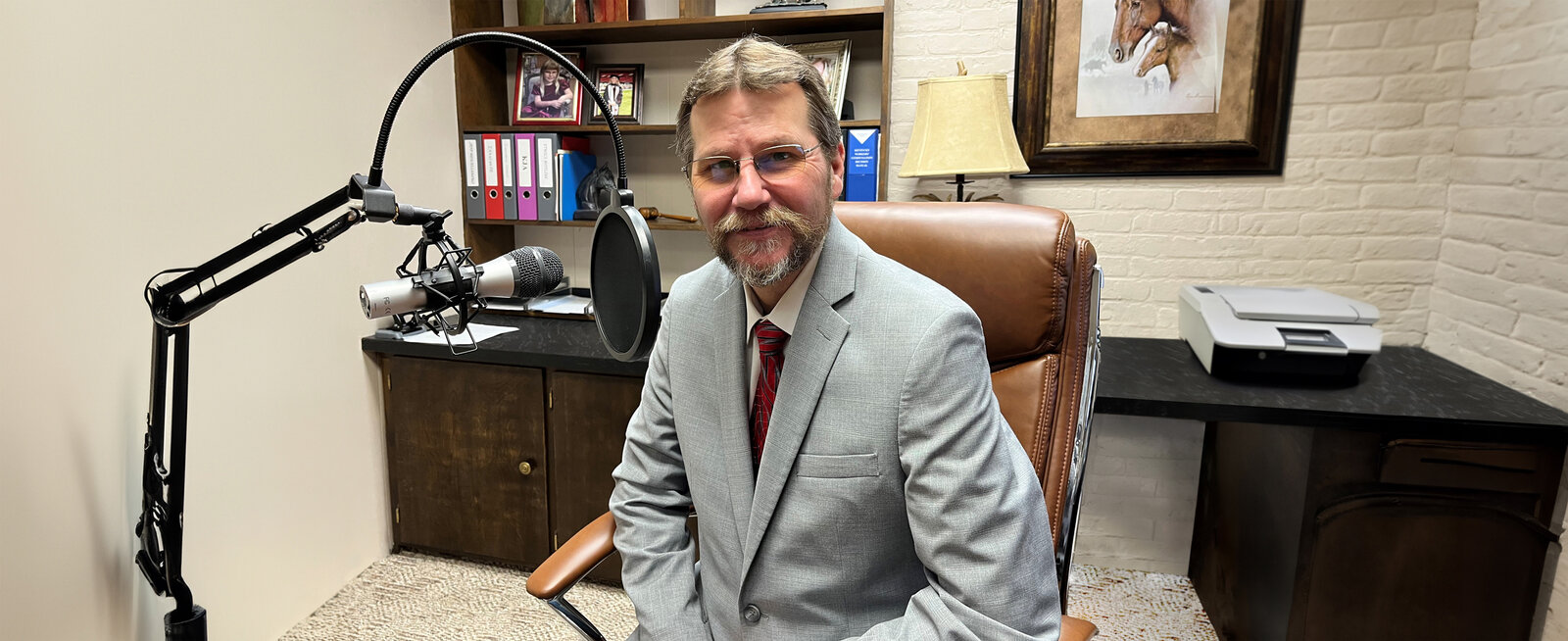
Episode 118: Calloway County workers’ compensation attorney Jeff Roberts discusses injuries in food production facilities. There are a wide variety of food production plants across the Western Kentucky region. When injuries occur in these facilities, workers’ comp plays an important role for the injured workers and their families.
Examples of Western Kentucky Food Production Facilities
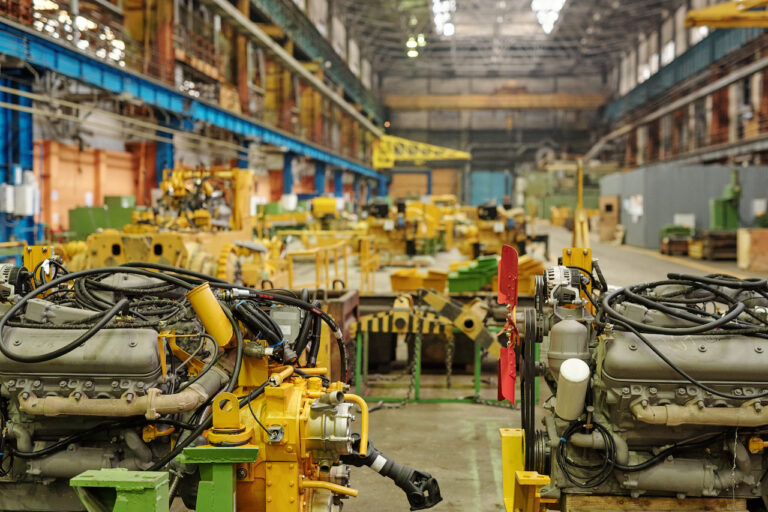
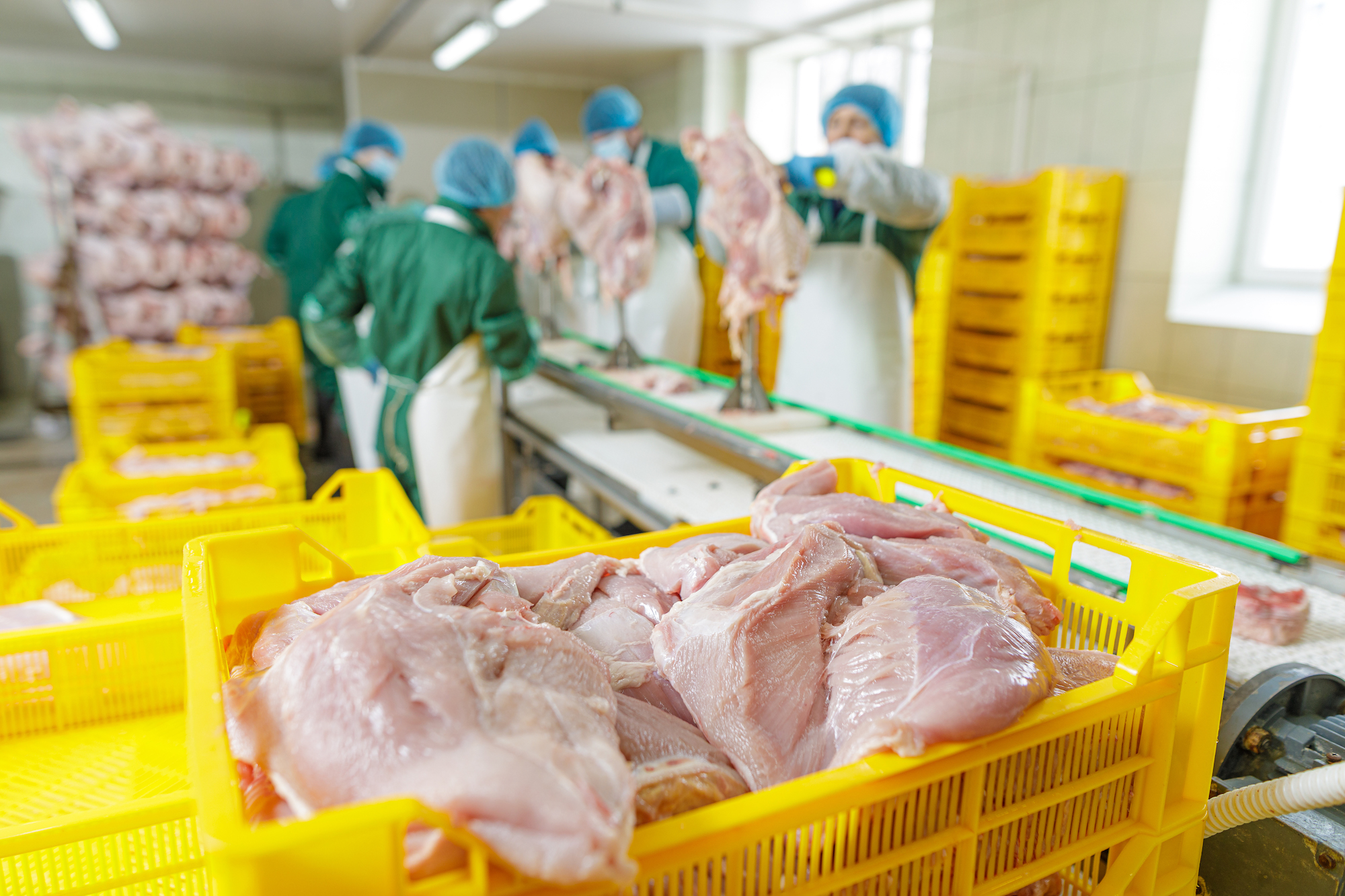
Most people think of agriculture and farming, but this episode will focus primarily on the food production facilities that process and package various products. Kenlake Foods and Saputo are located in Calloway County. Pilgrim’s Pride has several facilities located in Graves County. Tyson Foods has plants in Warren County and Webster County. Kitchen Food Company is coming online, joining a number of other food processing plants in Christian County.
Jeff has handled a significant number of workers’ compensation claims due to injuries in food production facilities over the previous 33 years. The next section of the discussion will cover some of the more common types of injuries workers suffer in these work environments.

Lacerations and Amputations
Unfortunately, these are very common in poultry and meat processing facilities. Jeff has handled cases involving nerve damage from lacerations and finger amputations from the meat saws and blades. It’s important to make sure the safety guards are properly installed and working. If not, inform your supervisor or safety coordinator, so it can be installed or repaired. If it persists, notify your safety committee.
There are instances in which the employer may decide to disable the safety guards and other equipment to enable the line to move faster. This puts employees at risk for dangerous injuries. Check out Episode 26 and Episode 13 of the podcast for specific information about these types of injuries.
If it can be proven that the company is violating its own safety protocols, whether it’s an actual OSHA violation or not, Kentucky workers’ comp can increase the benefits to the injured worker by 30% for temporary total disability and for any permanent disability benefits.
If the employee willfully violates the safety protocols, that does not disqualify him/her from receiving benefits. However, the amount of benefits will be reduced 15%. Again, they will still get workers’ comp benefits, but there will be a penalty assessed.
Burn Injuries in Food Production Facilities
Burns can happen from coming into contact with hot equipment. Burns also occur from steam or liquids. While many of the resulting injuries are first-degree or second-degree burns, they can also be third-degree burns (the most serious). Jeff has represented a number of clients injured by either hot liquids or hot oil.
If you’re injured on the job, except for a few rare circumstances, you should be able to file for and receive workers’ compensation benefits. Negligence doesn’t have to be proven, before you become eligible for workers’ comp. Voluntary intoxication can be a disqualifier for the right to receive workers’ comp benefits. However, the current law is somewhat surprising. Click the link in this paragraph for more information.
Repetitive Shoulder Injuries
Jeff has seen a lot of shoulder injuries in food processing facilities. Certain jobs require workers to lift heavy items and bins over their head, numerous times during the shift. This repetitive motion often results in shoulder injuries, over time.
Some employers look for ways to improve the process to eliminate this risk of repetitive motion injuries, while others don’t seem to be as concerned. Installing a simple lift arm might be a way to avoid many of the shoulder injuries that occur.
Fall Injuries in Food Processing Facility
These types of injuries from slips, falls and trips happen more often that people imagine. There may be an unexpected item sticking out into the aisle or some object left in the walkway. In food processing, it’s often because of a substance being on the floor. This could be water, soap or even a powder (such as flour).
Even if you don’t fall onto ground, the slip might cause you to twist a knee, resulting in torn ligaments or a similar injury.
Illness from Food-borne Pathogens
This could be a gray area because of the need to prove where the worker encountered the pathogen. The food poisoning may have been from a meal at home or in a restaurant. One of the factors Jeff looks for is to see if several employees came down with the illness at roughly the same time, especially if they don’t live in the same areas. This may help to point the cause back to the work environment.
Luckily, an illness from a food-borne pathogen typically only lasts a few days. You would need to be off work for 7 days to qualify for workers’ comp benefits for the missed work.
Your Duty to Notify Your Employer
This is a responsibility mentioned in many of Jeff’s workers’ compensation episodes. Under Kentucky law, an injured worker must notify his/her employer of a workplace injury. This needs to be a supervisor, manager, HR or even plant medical. Telling a co-worker does not satisfy the requirement.
Plant policy does not dictate Kentucky law. While your company may try to enforce a 24-48 hour notification policy, that is not the law. You have a reasonable timeframe in which to report the injury.
It’s also important that you notify your doctor that the injury happened at work. It can help to establish that the injury is work-related. You still need to notify someone up the food chain, at your facility.
We hope you found this episode insightful and helpful.
Thank you for listening!
What Do Other Clients Think About Jeff?
We always encourage listeners to read the Google Reviews Jeff Roberts has received from many of his clients. A 5-Star rating and the comments are earned recognition and demonstrate Jeff’s commitment to his clients. As a solo attorney, he has more Google Reviews than some firms with multiple attorneys. Jeff shares the credit with his staff at the Roberts Law Office. Successfully representing injured clients is a team effort. It’s why Jeff likes to say his firm offers small town service with big city results.
Jeff Roberts Represents Injured Clients Throughout Kentucky
With offices located in Calloway County (Murray) and now in Christian County (Hopkinsville), Jeff has a history of representing personal injury clients, workers’ compensation clients and social security disability clients across the state. He’s represented clients from Paducah, Bowling Green, Louisville, Covington, Whitesville and many other Kentucky locations. He’s not just a Western Kentucky injury attorney.
Is It Time to Speak with an Attorney about Your Workers’ Compensation Claim?
The office phone number is (270) 753-0053 or toll free at 800-844-5108. For more information, visit www.JeffRobertsLaw.com. This podcast is meant to provide information and is not legal advice. Jeff’s principal office is located at 509 Main Street, Murray, Kentucky. Co-host Jim Ray is a non-attorney spokesperson. This is an advertisement.