
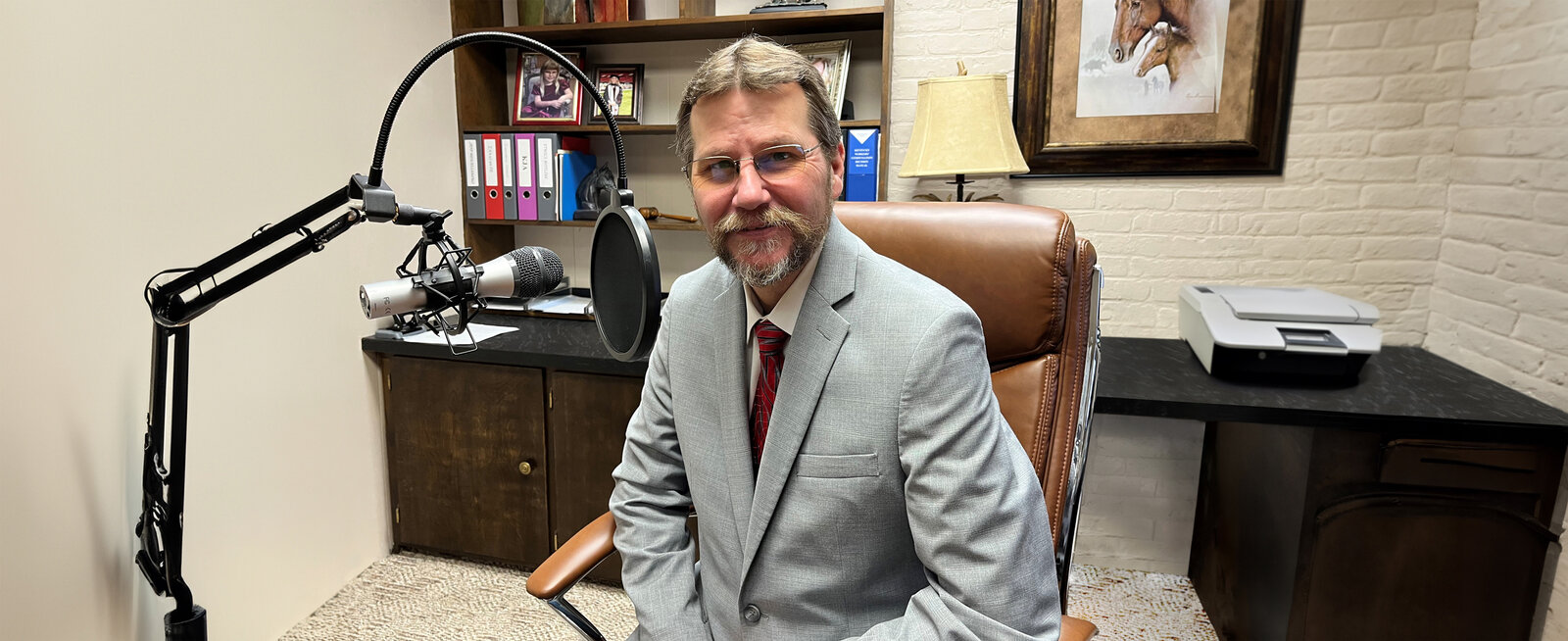

Episode 128: In today’s episode, Calloway County social security disability attorney Jeff Roberts discusses common “speed bumps” that can arise after a Social Security disability claim has been decided. He advises why these issues require prompt attention rather than panic. One significant challenge is the Continuing Disability Review (CDR), where the Social Security Administration evaluates whether a recipient remains disabled. Another common hurdle is a notice of overpayment, which often results from earnings or workers’ compensation offsets. These may be resolve by disputing a factual error or seeking a financial hardship waiver. Relocation can also disrupt a claim by changing the assigned hearing site or affecting state-based benefits like Medicaid for SSI recipients. Jeff encourages anyone facing these issues to contact an experienced attorney, noting that his firm provides “small town service with big city results” from offices in Murray and Hopkinsville.
What Is a Continuing Disability Review?
A continuing disability review is a right the Social Security Administration (SSA) has at its discretion. This is a process the SSA uses to determine if a person is still disabled and whether he/she should continue to receive disability benefit payments. Jeff spoke at length about this topic in Episode 42.
There is a possibility that the review has taken place behind the scenes. You may not be aware it was happening. If the SSA determines you no longer qualify for social security disability, it will send you a notice in the mail.
How Can I Avoid Losing My Disability Benefits?
Jeff strongly recommends that you continue to seek medical treatment for your injuries. If the Administration sees that you are no longer getting treated for the condition that caused your disability, it might assume you’ve recovered enough to find work.
If you continue to undergo treatment, on a regular basis, your records will show that you are still dealing with the result of the injury and need your disability benefits. This consistency in your medical records may prevent your case from reaching the point at which you are no longer considered disabled.
If I Receive a Continuing Disability Review Notice, Have I Lost My Benefits?
Not necessarily. This letter may ask you to provide updates about the doctors you’re seeing or other matters related to your disability status. The notice may also state the SSA has reached a decision, but you have the right to appeal that decision, by a very specific deadline. This may only be a few days, so don’t ignore these letters.
You should immediately contact your social security office to let them know you are going to appeal the finding. That step can satisfy the deadline requirements. You will continue to receive your social security disability benefits during your appeals process.
Social Security May Not Have the Full Picture until You Tell Them
When you’re on disability, you’ll have Medicare. If Medicare is primary, your medical records will be accessible and part of the continuing disability review. However, sometimes, Medicare is secondary, because a different form of insurance is acting as your primary. This can happen if you’re covered on your spouse’s insurance. Your complete medical records may not be fully updated in the system, because Medicare is only picking up a portion of your medical expenses.
You’ll be able to submit forms authorizing the Social Security Administration to contact the other doctors and providers to get the additional medical records related to your disability treatment. There may be additional types of forms for information related to your condition.
Should I Contact an Attorney if I Receive Notice of a Continuing Disability Review?
You can usually handle the initial stages on your own. For instance, submitting the forms to provide the list of other doctors and providers. There may also be forms asking you to detail your daily activities, including things you can’t do because of your disability. You can also reach out to the attorney who handled your original disability claim to discuss your options and the process.
If the letter you receive states the Administration has found that you are no longer considered disabled or eligible for benefits, you should contact a social security disability attorney. Remember to contact your local social security branch office to inform them of your intent to appeal. You don’t want to miss that deadline.
A Continuing Disability Review May Have Been Included in Your Original Decision
Even if you’ve continued your medical treatment, it’s possible the judge included an order for a review to take place after a specific timeframe. Some conditions may be treatable and eventually enable the individual to return to work. Your notice might have been triggered by that clause in your disability ruling.
Jeff gives the example of someone who sustained a back injury, but was unable to get surgery because they didn’t have insurance. Once the disability was granted, they could use Medicare to get the surgery. At some point, it may now be possible for that person to return to work and no longer require social security disability benefits.
Will My Attorney Receive Notice of the Continuing Disability Review?
No. If you are going to get your attorney involved, you need to contact him/her yourself. Assume your original attorney did NOT get a copy of the letter.
Notice of Overpayment from Social Security
If you are now showing consistent earnings, over a period of time, this may trigger a review of your eligibility for social security disability. Jeff explains how this can happen, even if your earnings are within the allowed, income limits. This limit is referred to as the Substantial Gainful Activity (“SGA”).
If your earnings surpass the income limits, the Administration can use that to prove you have the ability to generate substantial income. If you are slightly below the SGA limit, it might be assumed you are purposely keeping yourself below the income limit to maintain disability benefits. They may try to prove that you are actually capable of earning more.
If an overpayment is determined, you may have to reimburse the government, in a relatively short period of time.
What Types of Activities Can Result in an Overpayment of Disability Benefits?
As discussed, your income level might be the cause. However, if you are also receiving workers’ compensation benefits, those benefits could cause an issue. It’s possible to file for workers’ comp and social security disability benefits at the same time. However, it’s important that your workers’ comp settlement agreement be worded properly, so as to have the least impact on your ability to receive social security disability. If it’s not done correctly, once the Social Security Administration figures out you’re also receiving workers’ comp, they will come after the overpayment.
Important: If you are filing both a workers’ compensation claim and a social security disability claim, it’s important that you make sure both of your attorneys are aware of the claims. Your workers’ comp attorney might not know you’re filing for social security disability. Jeff handles both types of claims, so he can avoid this and ensure the offsets are properly worded. This will enable you to maximize your disability benefits.
What Are My Options if I’ve Received a Notice of Overpayment from Social Security?
There are two primary options. You can dispute the overpayment amount or you can ask for a waiver related to the overpayment.
Disputing an overpayment might be a good option if social security has miscalculated the amount or misinterpreted your earnings. Again, this confusion might be due to how a workers’ comp disability settlement agreement is worded.
It’s possible that a typo was responsible for your case getting flagged. Jeff uses the example of someone who receives $300 per month in earnings, but someone entered it as $3,000. Again, disputing the overpayment would definitely be worth the time and effort.
Jeff explains you also have the option for requesting a waiver for the overpayment. You may be able to establish the overpayment wasn’t your fault. This could happen if you submitted your workers’ comp settlement, but social security didn’t review your document for a number of months, later. You may be able to get a waiver for the overpayment because you took the proper steps and the delay by social security in reviewing the information wasn’t your fault.
Another situation in which you may be able to secure a waiver of the repayment for social security disability benefits is by proving it would present a financial hardship. If your monthly disability benefits are barely paying the bills, it might create a hardship to make the repayment amount on a monthly basis. You might also be able to pay it back over time, rather than making a large repayment.
Should I Hire an Attorney to Handle My Overpayment with Social Security?
In Jeff’s opinion, the answer is yes. Getting an attorney involved, especially the one who handled your original claim, may be to your advantage. He/she will know if the overpayment is correct. They’ll also know your options and how best to resolve the situation.
It may be more difficult if you didn’t originally use an attorney. You should probably engage with an attorney now to handle the situation.
Relocation Issues Related to Your Social Security Disability
This could occur when your involved in your disability claim or possibly after you are receiving disability benefits.
If you move while your original claim is being filed, your new location may require the claim to be handled by a different hearing site. Moving to a new home or apartment within the same community may not be an issue. However, moving to a different part of the state or to a different state may cause a problem.
If you’re in Murray, you have a Paducah hearing site. But if you were to move to Nashville, your case would be moved to a Nashville hearing site. Another factor to take into account is that you may need consider whether the additional expense of having your attorney handle your social security disability claim in the new location is cost effective. You may incur additional fees related to him/her having to travel to represent you.
While it may be possible to handle your hearing via video call or even over the phone, Jeff strongly recommends appearing in person for your disability hearing. Jeff also had a client join him for an episode dealing with this specific issue. The firm initially handling the case wasn’t going to travel to the hearing, but they ultimately fired that firm and hired Jeff because he explained the benefits of appearing in person before the judge who was going to rule on the claim.
Another consideration is that the new administrative law judge may be more difficult (or possibly more likely to approve your claim). This is referred to as the judge’s passage rate. It’s a variable you should discuss with your attorney.
What Happens if I Move after My Claim Has Been Decided?
This is less of an issue, compared to moving while your case is being handled. In this situation, you’re probably already receiving your disability benefit payments, via direct deposit. If you move, you may need to change banks. It may take social security time to update their payment system to the new bank account.
If you close your original bank account and then submit the new bank’s account information to social security, what happens to your payments while you’re waiting for them to update your bank account? I can cause cashflow problems making it difficult for you to pay bills.
Jeff recommends leaving the original bank account open, so it can receive the direct deposits. Then, submit your new bank account information to social security. You’ll still have access to the payments, because your original account is still open. Once the deposits begin going into your new account, then it should be okay to close the original account. This timing can help to avoid unnecessary delays and financial issues.
We hope you found this episode insightful and helpful.
Thank you for listening!
What Do Other Clients Think About Jeff?
We always encourage listeners to read the Google Reviews Jeff Roberts has received from many of his clients. A 5-Star rating and the comments are earned recognition and demonstrate Jeff’s commitment to his clients. As a solo attorney, he has more Google Reviews than some firms with multiple attorneys. Jeff shares the credit with his staff at the Roberts Law Office. Successfully representing injured clients is a team effort. It’s why Jeff likes to say his firm offers “Small Town Service with Big City Results.”
Jeff Roberts Represents Injured Clients Throughout Kentucky
With offices located in Calloway County (Murray) and now in Christian County (Hopkinsville), Jeff has a history of representing personal injury clients, workers’ compensation clients and social security disability clients across the state. He’s represented clients from Paducah, Bowling Green, Louisville, Covington, Whitesville and many other Kentucky locations. He’s not just a Western Kentucky injury attorney.
Is It Time to Speak with an Attorney about Your Social Security Disability Claim?
The office phone number is (270) 753-0053 or toll free at 800-844-5108. For more information, visit www.JeffRobertsLaw.com. This podcast is meant to provide information and is not legal advice. Jeff’s principal office is located at 509 Main Street, Murray, Kentucky. Co-host Jim Ray is a non-attorney spokesperson. This is an advertisement.

