
Episode 113: Calloway County injury attorney Jeff Roberts provides the answer to the question, “Do I have a premises liability claim?” He’ll begin by explaining what that type of claim is and then how this can happen at a place of business or even at someone else’s home.
What Is a Premises Liability Claim?
Jeff explains it’s a claim against a property owner for an injury that occurs on someone else’s property. It must be attributed to some kind of negligence on their part. If that can be proven, they can be liable for your medical bills, lost wages, your pain and suffering and other damages.
It’s similar to the types of damages you’d pursue if you were in a car wreck. Again, you must be able to prove negligence on behalf of the property owner, or someone who leases the property from the owner.
Premises Liability Claims in a Commercial Setting
This commonly occurs when someone slips on a liquid in the aisle of a grocery store or other retail store. It could be dish soap from a punctured bottle, drops of milk from a container, oil at an automotive store, etc. This are often referred to as slip and fall injury.
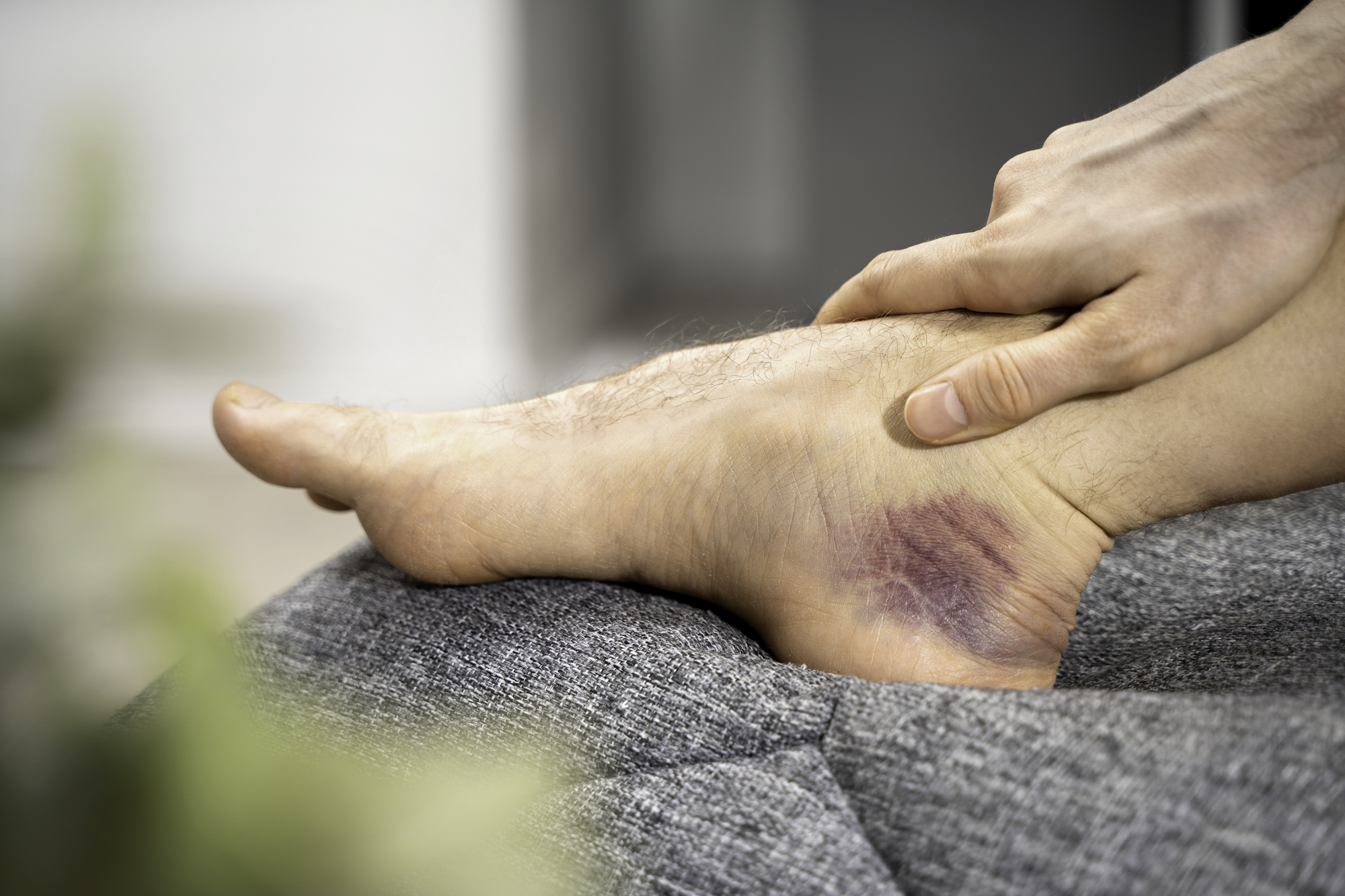
The resulting injury could be as minor as a sprained ankle, to something far more serious, such as a traumatic brain injury from hitting one’s head during the fall.
The slip and fall injury claim doesn’t have to involve a liquid. A piece of paper or dryer sheet from an open package laying on the floor could actually cause a hazard.
Determining Negligence Involves a Number of Factors
Jeff will review the evidence to try to determine what substance was actually on the floor, how the liquid or other item got there, and how long it had been there before the injury occurred.
If there’s water on the floor near the ice machine, and the business knows that often occurs, did they take steps to properly address the situation? Did they place floor mats on the floor, was there a cone to indicate the floor might be slippery? If not, they may be negligent because they knew this was a hazard.
If a child spills a liquid in the aisle, the parent leaves the area and someone else slips on the substance, it’s possible the store didn’t have the opportunity to discover the issue and to clean it up, before the injury occurred.
However, if the store personnel are notified of the spill, or find it on their own and don’t take steps to clean it up in a reasonable amount of time, they may be held liable for their negligence.
Jeff reminds us that Kentucky is a pure comparative fault state. He discussed that in Episode 96. It may be decided the person who slipped and fell may have some blame for the resulting injury. The insurance company for the business is going to attempt to shift or split the blame to lessen the financial impact of any settlement or lawsuit. The insurance company is going to argue the injured person should have noticed the hazard and walked around it or avoided the area. Since they chose not to, they are at least partly responsible. This isn’t always the case, but it’s a common tactic.
Trip and Fall Claims
These cases involve an injury resulting from an item intruding into the walkway, which caused the patron to trip over it and sustain an injury. For instance, a 2×4 could be sticking out of the rack at Lowe’s or Home Depot that cause someone to trip over it. It could be a box, cord or other item on the floor that is laying in the designated walking area.
Again, pure comparative fault can apply in these circumstances.
Both slip and fall, as well as trip and fall injuries may should prompt you to ask, “Do I have a premises liability claim?”
Items Falling Off of the Shelf
This is another common cause of a premises liability claim. An item falling from a shelf, or being pushed off of the shelf can hit a shopper in the head, shoulder or other body part, resulting in an injury. Depending on what the item was, it could cause significant injuries, such as a broken bone or head injury.
Jeff takes a few minutes to use this example to illustrate how civil lawsuits protect society. Today, when Lowe’s is loading items onto a higher shelf with a forklift, they not only block that aisle, but also the adjacent aisle to prevent a potential injury. In the past, they didn’t block the other aisle and that lead to a number of serious injuries. Jeff’s represented client who have been injured by falling merchandise. Some of his clients have been totally disabled because they were hit in the head by a falling item from the rack of shelves.
Injuries in Common Areas
Environments such as an apartment complex have common areas where injuries can occur. This could include the area in or around the pool, a stairwell, laundry room, etc. An injury to a renter or visitor to the apartment complex could result in a premises liability claim against the owner or management company of the complex, not typically the tenant, as a general rule.
For example, assume the lighting is inadequate or the lights have been burned out in a stairwell, for a period of time. If the issue isn’t resolved, and an injury occurs, this could be proven to be negligent behavior on behalf of the owner or management company of the complex.
Another example could be a back deck or railing that was rotten, if it was a known hazard the complex, an in some cases the tenant could be held responsible. For instance if a guest is invited over and the deck rail gives way, resulting in an injury to the guest, there could be a claim for negligence. The guest should ask an experienced attorney, “Do I have a premises liability claim?”
If a guest slips on the floor inside the apartment, or is bitten by a pet, it could result in a premises liability claim against the renter of the apartment, not the owner or manager of the complex.
Can a Homeowner be Sued for Premises Liability?
Yes. For instance, if the homeowner has a hole in their yard and a guest twists an ankle or injures a knee, because they weren’t warned in advance by the homeowner. If there’s a problem with the front porch steps and a delivery person is injured while delivering a package, the delivery person could file a premises liability claim, in addition to a workers’ compensation claim.
If the railing on the back deck gives way and injures a guest, this can result in a premises liability claim against the homeowner’s insurance policy. Jeff has handle these types of claims, as well.
If the homeowner knows about a hazard on the property and fails to adequately warn a guest or guests, this can be proven to be negligence.
What if the Homeowner Didn’t Know the Wood Was Rotting?
There’s a potential argument the homeowner may not have known and therefore can be held negligent. However, Jeff explains that if it’s a situation involving rotted wood, it would have been there for some time. The homeowner may have a hard time arguing he/she wasn’t aware of the issue, at their own home.
It the above situation, it’s a dangerous situation the homeowner knew or should have known about. For this reason, a resulting injury to a guest, delivery person or other may result in a successful claim.
If you know you have a hazard on your property, block it off, fill it in or do something to repair the hazard before someone gets injured. At the same time, it would be a good idea to make people aware of the issue, so they can avoid the area. Marking the hazard and warning people can show that you’ve taken steps to avoid any negligence.
What if the Hazard Is Considered Open and Obvious?
Jeff explains that the law has changed on this in recent years. Jeff actually wrote an amicus brief (“friend of the court” brief) on behalf of the Kentucky Justice Association. The case involved actually resulting in the law being changed.
In years past, a naturally occurring hazard, such as snow and ice on a walkway or in a parking lot was considered to be open and obvious. This is another way Kentucky’s pure comparative fault would shift some of the liability onto the person who was injured.
The issue gets complicated when snow covered the walkway to the entrance of the store. If the store owner didn’t clear or treat the area, the hazard was open and obvious. However, if they made an effort to clear it and someone still slipped, they could be held liable. Therefore, people were deciding not to clear their walkways and parking lots. It just didn’t make a lot of common sense.
The new position, according to the law, is that open and obvious is not an absolute defense to a premises liability claim. At this time, the jury can take this into account in determining how much of the blame is on the storeowner and how much is on the person walking on the snowy walkway.
Will My Medical Expense be Automatically Covered in a Premises Liability Claim?
Unlike PIP coverage (“no-fault” insurance) in a Kentucky automobile accident, the coverage for your medical bills isn’t automatic in a premises liability claim. Some homeowner’s policies and commercial liability policies do have a MedPay benefit to cover $5,000 of medical bills, regardless of who’s negligent. For instance, if you at someone’s home or business, assuming their policy has this benefit, you could trip on your own shoelaces and still have access to that MedPay coverage if you are injured. Some policies only have $1,000-$2,000 of coverage.
Nonetheless, if your attorney is successful in negotiating a settlement, you should end up with getting at least some of your medical bills covered. Remember, if you used your health insurance to cover some of those medical expenses, and then receive a settlement or verdict, your health insurance has the right to get reimbursed from the settlement for what they covered, on your behalf.
Unlike a workers’ comp or other injury settlement, a premises liability claim normally would not include a claim for lost wages. Jeff often recommends people get a short-term disability insurance policy to help cover the bills and keep food on the table, if you were to get hurt.
We hope you found this episode insightful and helpful.
Thank you for listening!
What Do Other Clients Think About Jeff?
We always encourage listeners to read the Google Reviews Jeff Roberts has received from many of his clients. A 5-Star rating and the comments are earned recognition and demonstrate Jeff’s commitment to his clients. As a solo attorney, he has more Google Reviews than some firms with multiple attorneys. Jeff shares the credit with his staff at the Roberts Law Office. Successfully representing injured clients is a team effort. It’s why Jeff likes to say his firm offers small town service with big city results.
Jeff Roberts Represents Injured Clients Throughout Kentucky
With offices located in Calloway County (Murray) and now in Christian County (Hopkinsville), Jeff has a history of representing personal injury clients, workers’ compensation clients and social security disability clients across the state. He’s represented clients from Paducah, Bowling Green, Louisville, Covington, Whitesville and many other Kentucky locations. He’s not just a Western Kentucky injury attorney.
Is It Time to Speak with an Attorney about Your Premises Liability Claim?
The office phone number is (270) 753-0053 or toll free at 800-844-5108. For more information, visit www.JeffRobertsLaw.com. This podcast is meant to provide information and is not legal advice. Jeff’s principal office is located at 509 Main Street, Murray, Kentucky. Co-host Jim Ray is a non-attorney spokesperson. This is an advertisement.